
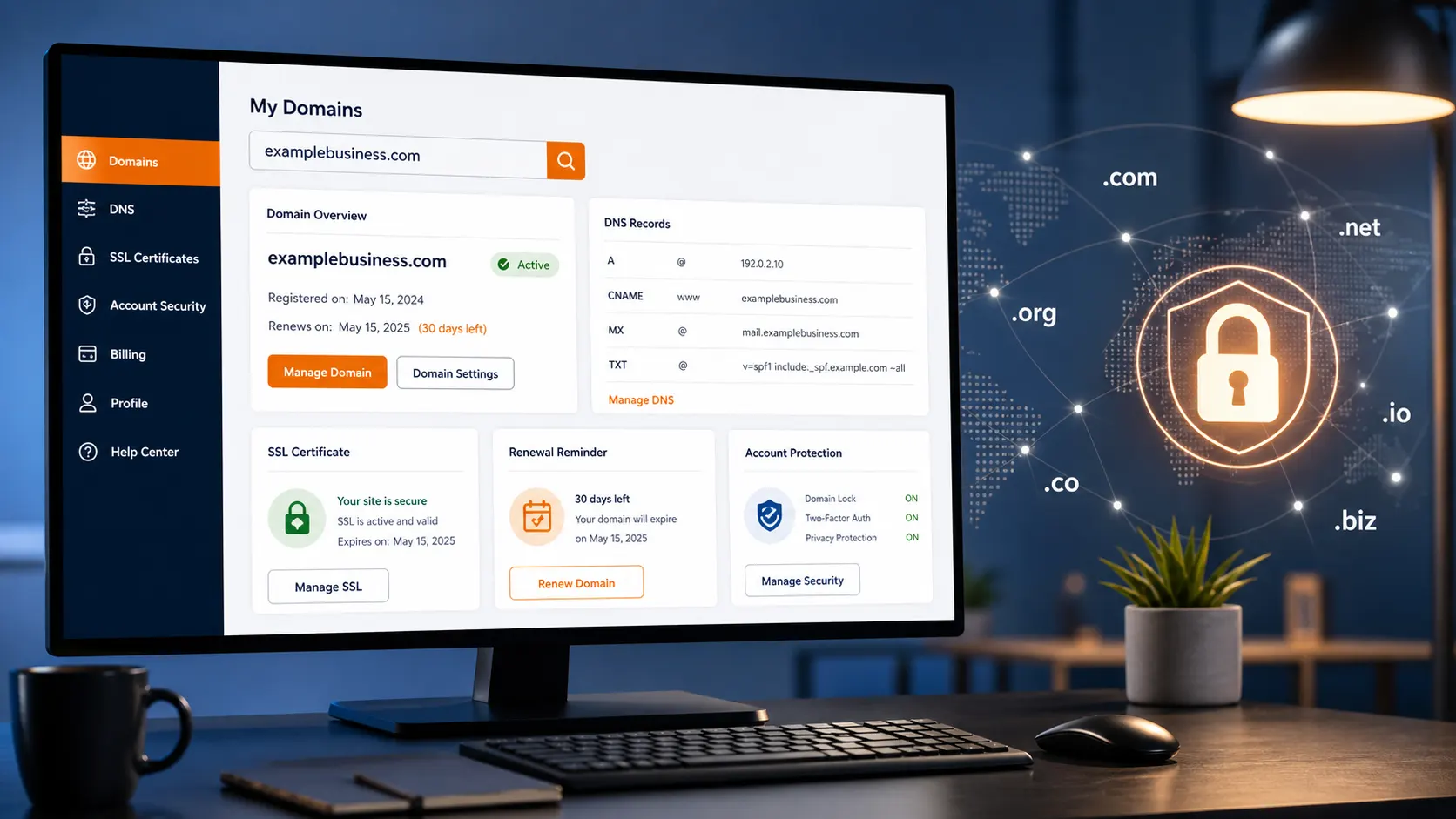
Why Website Security Now Starts With Better Hosting

For years, many small business owners treated website security as something separate from hosting. Hosting was where the site lived. Security was something added later, usually through a plugin, firewall, or cleanup service after something went wrong.
That approach is becoming harder to defend.
As websites handle more customer data, payment activity, appointment requests, lead forms, email routing, and business-critical communication, the hosting environment has become one of the first lines of defense. A fast website matters. A reliable website matters. But a secure website matters just as much, especially when attackers continue to target weak passwords, outdated software, vulnerable web applications, and poorly maintained systems.
The Federal Trade Commission tells small businesses to use multi-factor authentication, control access, encrypt sensitive data, conduct regular backups, and update security software regularly.¹ Those are not advanced enterprise luxuries. They are basic safeguards for businesses that depend on their websites every day.
Hosting now sits directly in the middle of that responsibility.
Security Is No Longer Optional Infrastructure
A website does not need to be large, famous, or controversial to become a target. Many attacks are automated. Bots scan the internet looking for outdated software, exposed login pages, weak credentials, insecure plugins, vulnerable scripts, and misconfigured servers.
That means small business websites can be attacked simply because they are online.
The Cybersecurity and Infrastructure Security Agency has pushed the technology industry toward a “secure by design” model, meaning security should be built into products and systems from the beginning rather than treated as an afterthought.² For hosting customers, that idea matters because the safest website setup is not built only at the WordPress dashboard level. It also depends on server configuration, access controls, patching practices, backup systems, account isolation, malware scanning, and the provider’s response process.
A hosting company cannot control every decision a website owner makes. But it can provide an environment that makes secure choices easier and risky choices harder.
Credentials Remain A Major Weak Point
One of the most common security problems is also one of the simplest: stolen or misused login credentials.
The Verizon 2025 Data Breach Investigations Report found that credential abuse remained a major initial access vector in breaches, and its analysis of basic web application attacks continued to highlight the role of stolen credentials and application access.³ For website owners, that should raise a simple question: what happens if someone gets into the wrong account?
Good hosting security should help reduce that risk through stronger login protections, multi-factor authentication, separate user permissions, secure control panels, limited account access, and clear recovery options. Businesses should also avoid sharing one admin login among multiple users, contractors, or vendors.
A secure hosting setup is not just about keeping attackers out. It is also about limiting damage if one account is compromised.
Backups Are A Business Continuity Issue
Backups are often discussed only after a disaster. That is the worst time to discover they were incomplete, outdated, difficult to restore, or never running in the first place.
The FTC specifically advises small businesses to conduct regular backups as part of basic cybersecurity protection.¹ That matters because attacks are not the only risk. Websites can also be damaged by failed updates, plugin conflicts, accidental deletions, server problems, corrupted files, or human error.
A dependable hosting plan should make backups easy to understand. Business owners should know how often backups run, how long they are retained, whether files and databases are included, and how restoration works.
A backup that cannot be restored quickly is not much of a safety net. It is more like a parachute packed by a raccoon. Technically present, spiritually questionable.
Performance And Security Are Connected
Website performance is usually discussed as an SEO and user experience issue, but it also has a security connection. Slow, overloaded, outdated, or poorly maintained infrastructure can make a website harder to manage and easier to neglect.
Google’s Core Web Vitals measure real-world user experience, including loading performance, interactivity, and visual stability.⁴ Google also confirmed that Interaction to Next Paint became a Core Web Vital in March 2024, replacing First Input Delay as the responsiveness metric.⁵
For business owners, the practical takeaway is clear: the technical health of a website matters. Hosting affects page speed, uptime, server response, caching, traffic handling, and the ability to serve visitors consistently.
A secure but painfully slow website still creates problems. A fast but poorly protected website creates different problems. A strong hosting setup should support both.
What Businesses Should Expect From A Hosting Provider
Small businesses do not need to become server administrators to make better hosting decisions. They do need to ask better questions.
A modern hosting provider should be able to explain what protections are included, what responsibilities belong to the customer, and what support is available when something goes wrong. Important areas include SSL certificates, server monitoring, malware scanning, firewall protections, software update support, account isolation, backup retention, multi-factor authentication, and support availability.
The FTC has specifically encouraged small businesses to ask web hosts whether multi-factor authentication is available, how data is backed up, and what happens during a security incident.⁶ Those questions are still relevant because they move the conversation beyond price and storage space.
Cheap hosting can look attractive until the site goes down, gets infected, loses data, or becomes difficult to recover. At that point, the real cost is not the monthly hosting bill. It is lost time, lost trust, lost leads, and emergency repair work.
Website Owners Still Have A Role
Better hosting does not remove responsibility from the website owner. Security is shared.
Business owners should still use strong passwords, enable multi-factor authentication where available, keep software updated, remove unused plugins and themes, limit admin access, review user accounts, and avoid installing unknown or poorly maintained tools.
They should also pay attention to who has access. Designers, developers, marketing vendors, employees, and outside contractors may all need access at different times. But access should be limited to what each person actually needs, and old accounts should be removed when work is complete.
The goal is not paranoia. The goal is control.
The Bottom Line
Website security now starts long before a plugin is installed or a malware scan is run. It begins with the hosting environment, the access controls, the backup system, the update process, and the provider’s approach to protecting customer sites.
For small businesses, the right hosting choice can reduce risk, improve reliability, support better performance, and make recovery easier when problems happen.
A website is often the first place customers go to judge a business. If that site is slow, broken, infected, or unavailable, the damage is not just technical. It is reputational.
Good hosting is not just where a website lives. It is part of how that website stays open, trusted, and ready for business.
Sources
¹ Federal Trade Commission, Cybersecurity for Small Business
https://www.ftc.gov/business-guidance/small-businesses/cybersecurity
² Cybersecurity and Infrastructure Security Agency, Secure by Design
https://www.cisa.gov/securebydesign
³ Verizon, 2025 Data Breach Investigations Report
https://www.verizon.com/business/resources/T16f/reports/2025-dbir-data-breach-investigations-report.pdf
⁴ Google Search Central, Understanding Core Web Vitals and Google Search Results
https://developers.google.com/search/docs/appearance/core-web-vitals
⁵ Google Search Central Blog, Introducing INP to Core Web Vitals
https://developers.google.com/search/blog/2023/05/introducing-inp
⁶ Federal Trade Commission, Cybersecurity for Small Business: Hiring a Web Host
https://www.ftc.gov/business-guidance/blog/2019/02/cybersecurity-small-business-hiring-web-host
About the Author
J.R. Murphy is a technology writer focused on web hosting, domains, website security, and the digital tools that help businesses build a stronger online presence. His work is written for business owners, website managers, and everyday users who need clear, practical information without unnecessary technical noise.
With a focus on hosting infrastructure, uptime, cybersecurity, backups, domain management, business email, and website performance, J.R. helps readers understand how the systems behind a website affect real-world results. His articles often explore the connection between reliable hosting and customer trust, search visibility, online safety, and long-term business growth.
J.R. brings a research-driven approach to every topic, using credible sources and plain-language reporting to explain what matters, why it matters, and what business owners should look for when making digital decisions. His goal is to make web technology easier to understand, easier to manage, and more useful for organizations of all sizes.
Through his writing, J.R. Murphy helps readers move beyond surface-level website decisions and take a smarter approach to the infrastructure that supports their brand, their customers, and their online future.
Recent News & Insights
Keep up with useful articles, straightforward guidance, and professional insight on websites, hosting, domains, security, and online business tools. Our news section helps you understand your choices, make better decisions, and manage your website with greater confidence.

Need Something Else?
Discover additional services and solutions to support your website, with straightforward pricing and flexible options that make it easy to find the right fit.
Shared Hosting
Shared hosting is a great fit for smaller websites that don’t require dedicated resources.
VPS Hosting
More power and control with dedicated resources for growing websites and applications.
Domain Names
Search, register, and manage domain names with simple pricing and easy setup.
Website Solutions
Get help building, managing, or improving your website with practical solutions.
Ready to Build with Confidence
From hosting and domains to technical support and website solutions, we help businesses choose reliable services built for performance, stability, and long-term growth.

Reliable hosting, domain services, and technical solutions designed to support websites, servers, and growing businesses with confidence.
- Hobe Sound, FL
- support@fosservicesllc.com
Websites
Hosting
© 2026 FOS Services LLC. All Rights Reserved